Why retinol is about more than a single ingredient
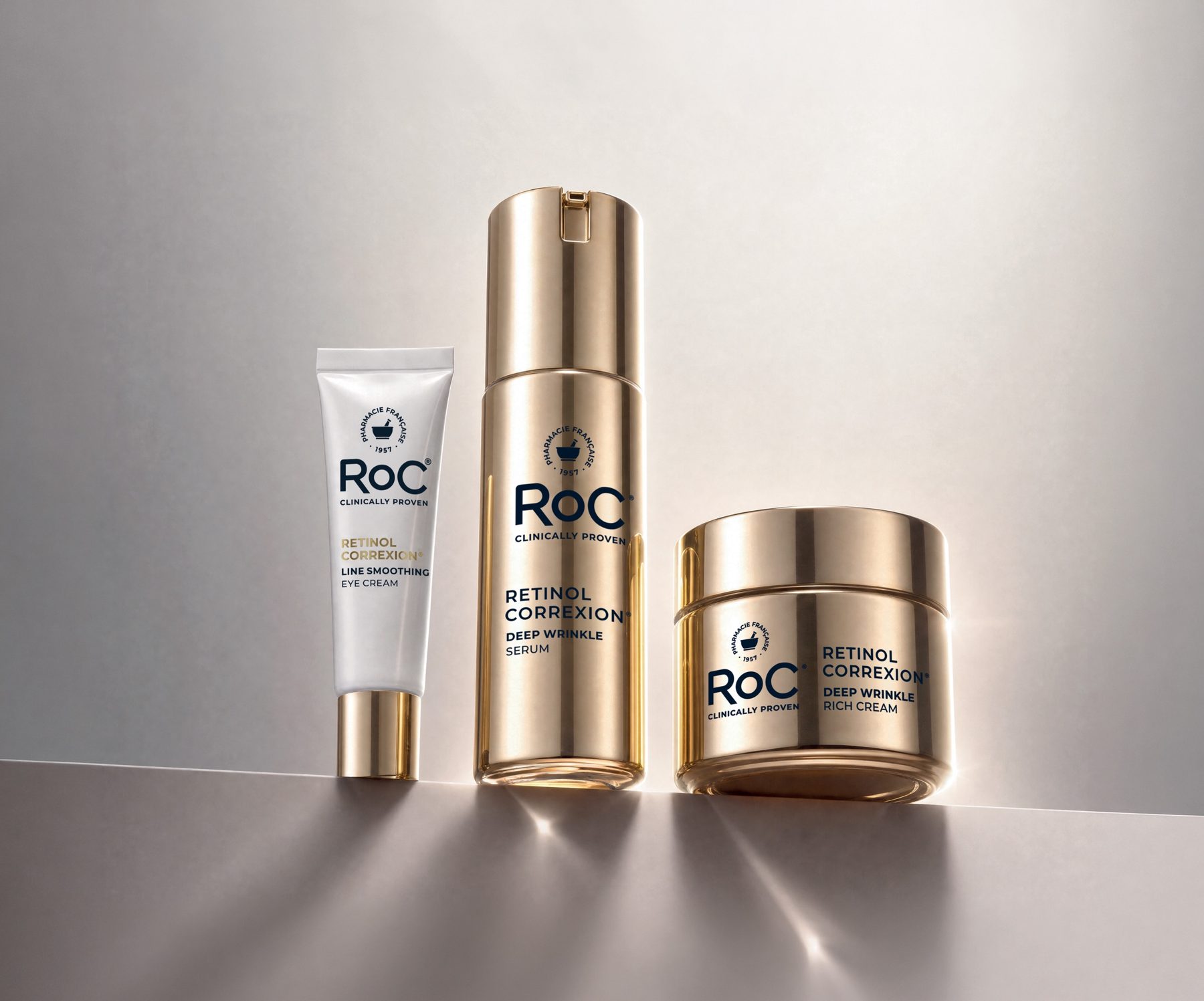
Retinol is now common in skincare. The ingredient name alone does not tell a consumer how well a particular formula will perform.
That is why RoC’s more than 30 years of retinol research matter.
In 1995, RoC became the first to stabilize retinol in a skincare product. Since then, RoC has kept working on the questions that decide how retinol performs in a finished formula: stability, skin compatibility, formulation and how well the product fits into daily use.
RoC’s Patented Clinical Retinol Technology is clinically proven to be 7x more effective than standard retinol* and is used in selected RoC retinol products. As of 2026, five of RoC’s six active patents relate to retinol.
*Based on a clinical study comparing RoC Patented Clinical Retinol with an equal concentration of standard retinol: wrinkle improvement after 12 weeks, 34 subjects.
In 2015, RoC published a one-year clinical study showing that the benefits of its retinol did not plateau after a year of use.
In 2025, RoC completed a study benchmarking the stability of 35 retinoid formulas, with results presented at the American Academy of Dermatology (AAD) Annual Meeting in March 2026.
At AAD, RoC also presented its ex vivo Retinol Genome Study, an ex vivo Patented Clinical Retinol vs. Retinal explant study and first results from a pilot clinical study of Clinical Retinol in identical twins.
RoC is now expanding that work with a 12-week U.S. study recruiting at least 30 pairs of female identical twins. The study pairs clinical skin assessments with biometric data from Oura Ring to examine how Clinical Retinol and lifestyle relate to visible skin aging and skin longevity. Because identical twins share the same genetic blueprint, differences that emerge over the course of the study are less likely to be explained by genetics. Results are expected in mid-2027.
The ingredient name alone does not tell a consumer how well a particular formula will perform.
Retinol remains an active research area for RoC, not simply a historical credential. The company continues to study how formulation, stability and clinical testing affect what the finished product can do.